- Home
- Services
- About
- Real Weddings
- Journal
- Wedding Planner
- Wedding Beauty And Wellness
- Wedding Essentials
- Ideas & Tips
- Destination Wedding
- Hacienda Wedding
- Hacienda Sac Chich
- Hacienda Tekik de Regil
- Hacienda Tamchen
- Hacienda San José Cholul
- Hacienda Chichí Suárez
- Chablé Resort
- Hacienda Itzincab Cámara
- Hacienda Temozon Sur
- Hacienda Dzibikak
- Hacienda San Pedro Ochil
- Hacienda Santa Cruz Palomeque
- Hacienda San Diego Cutz
- Hacienda Selva Maya
- Hacienda Sotuta de Peón
- Hacienda Uayamon
- Hacienda Suytunchén
- Hacienda Texan de Palomeque
- Mansion Hotel
- Quinta Montes Molina
- Beach Wedding
- Cenote Wedding
- Religious Wedding
- Legal Wedding
- Symbolic wedding
- Catering
- Favor
- Wedding Fashion
- Media
- Contact
Historic estates in Yucatán, Mexico
Hacienda Wedding Venues in Mexico
wedding venues in Mexico
Some couples want a wedding that ends when the ballroom lights come on. This guide is for the ones who want the place itself to be the reason people fly. Restored estates with three hundred years behind the walls, taken over entirely, for more than one evening.
START HERE
Four questions every venue search in Mexico runs into
Searching for a wedding venue in Mexico from another country produces two hundred photographs and almost no criteria. Everything looks beautiful in a photograph. What almost nothing tells you is which of these places you can actually take over, for how long, and with what infrastructure behind the walls.
So this guide answers, in order: what kinds of venue Mexico really offers and how they differ. What a hacienda is, beyond the word. Which estates in Yucatán host weddings, and what separates one from another. And what you should be asking about a place before you fall in love with a photograph of it.
This guide answers four questions, in order.
On this page
The first question is the one most couples skip, because it sounds obvious. It is not. The three options below are not three price points of the same thing. They are three different weddings.
The landscape
Choosing a wedding venue in Mexico starts with choosing a category
The packaged venue
- Shared property. Other guests, other events, sometimes another wedding the same day
- A fixed block of hours, usually five or six, with a hard stop
- Catering, sound and decor supplied by the venue, from a set menu
- Interchangeable by design. The same evening is available in six countries
The private historic estate
- Exclusive use. The gates close behind your guest list
- Multiple days, not a slot. Welcome dinner, wedding, farewell breakfast
- Every vendor chosen rather than inherited, kitchen included
- Unrepeatable. There is one of each, and it has a name and a history
A note on the beach. Most search results for this category will push you toward the Caribbean coast. That is a real option and for some couples the right one. It is not what this guide covers, and it is not what these estates do. If a beach wedding is what you want, you will be better served somewhere else, and we would rather say so on this page than in the fourth email.
The place itself
What hacienda wedding venues were, before they were wedding venues
Haciendas were built across most of Mexico, but not evenly. The henequén boom of the nineteenth century made the Yucatán Peninsula, for a few decades, one of the wealthiest regions in the Americas, and the estates built with that money were larger and more numerous than anywhere else in the country. Most of Mexico has haciendas. Yucatán has the ones built when the money was extraordinary, and enough of them survived restoration to make a real choice possible.
A hacienda is not a hotel with old architecture. It was an agricultural estate, most of them built between the seventeenth and nineteenth centuries, and in Yucatán most were built on henequen, the fibre that made this part of Mexico briefly one of the wealthiest places on the continent.
That history is the reason the buildings are the shape they are. The main house was built for a family, so the rooms are proportioned for people rather than for conferences. The machine house was built to hold industrial equipment, so it has ceiling heights no modern venue can imitate. The chapel was built because the estate was a self-contained village. The arcades exist because there was no air conditioning and the architecture had to do that work instead.
When one of these estates is restored and opened for a celebration, none of that is decor. It is the building doing what it was already doing three centuries before anyone thought to get married in it.
- The machine house. Usually the largest covered space, and the reason a hacienda can hold a dinner through a rainstorm
- The arcades and courtyards. Where the ceremony and the cocktail hour tend to live
- The chapel. Present in many estates, in varying states of restoration
- On-site rooms. Some estates lodge the couple and a small circle, others lodge the whole party

All of that is true of the category. None of it tells you which one to pick, and that is the part no photograph will resolve for you either. So here are the actual estates.
The estates
Merida and Yucatan wedding venues, estate by estate
These are the properties where the weddings in this archive actually took place. Each one has its own page, with real celebrations photographed inside it rather than a marketing gallery.
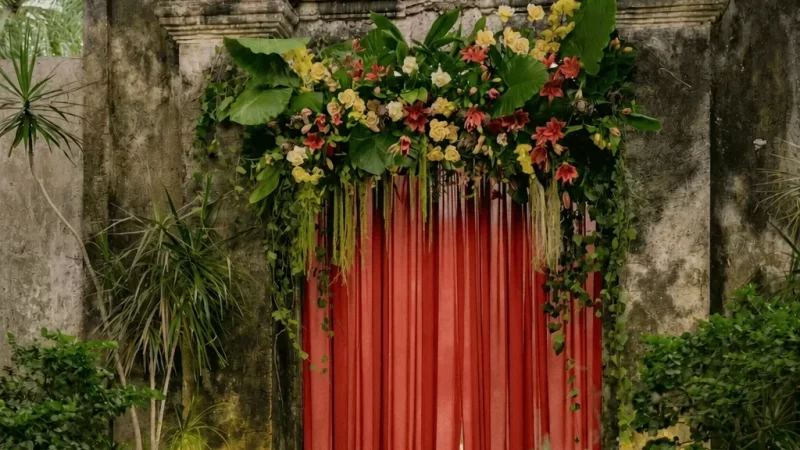
The most requested estate here, open and architectural, built around a long central axis.
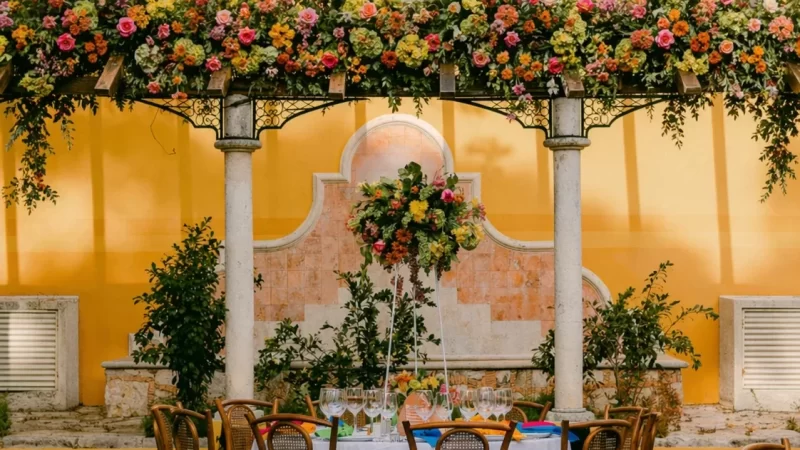
The estate closest to Mérida, so guests move between city and property without a long drive.
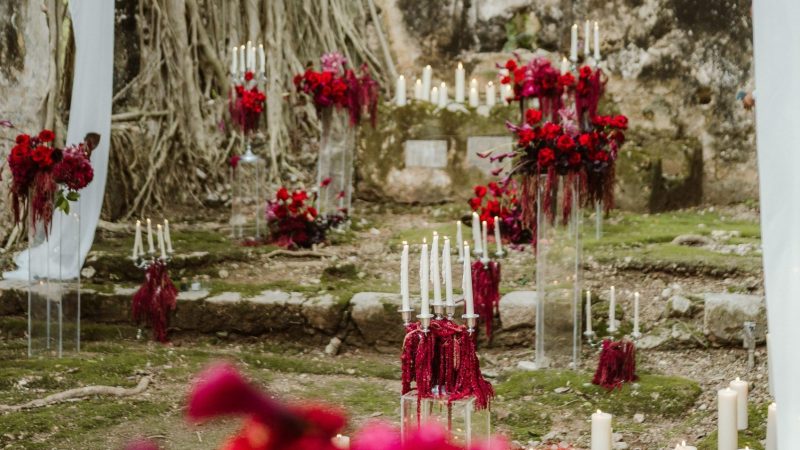
Recently reopened, with architecture that has not yet worn in from a decade of weddings.
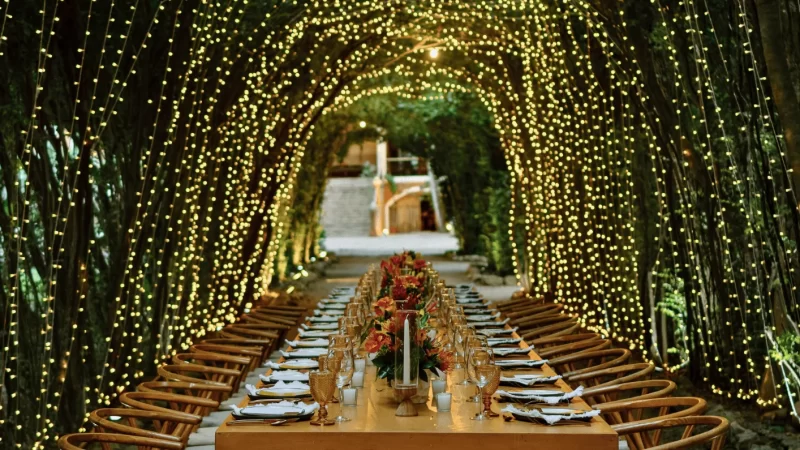
Green and enclosed, with vegetation grown into the architecture rather than arranged around it.
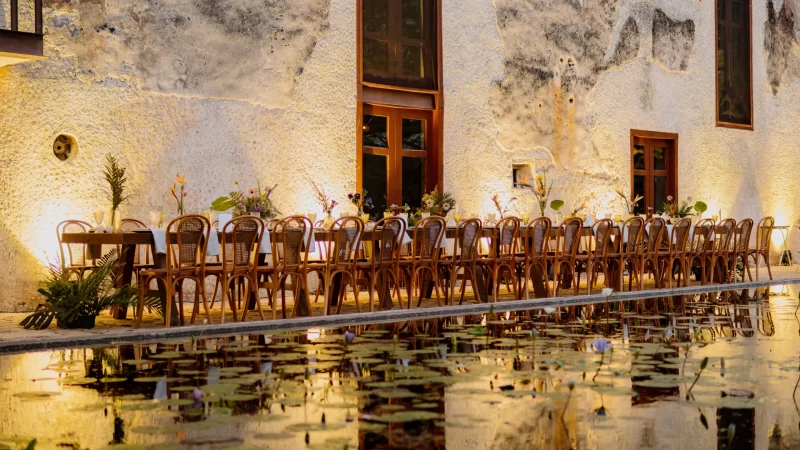
One of the quietest properties here, far enough out that the evening has no ambient noise.
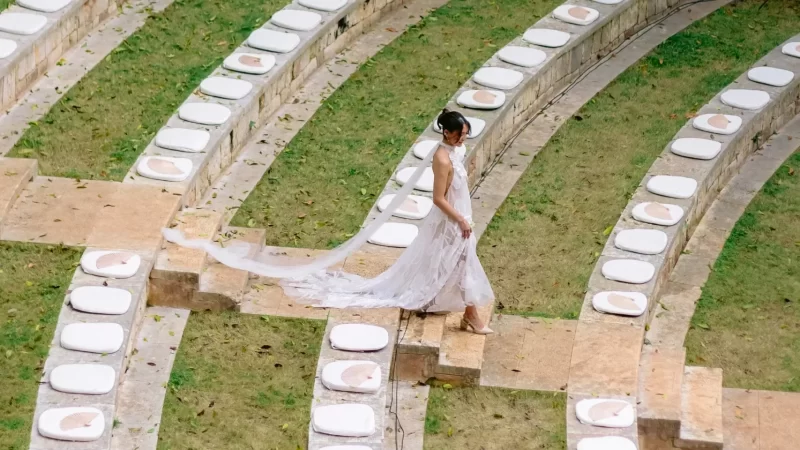
South of the city on the old convent route, with water on the grounds and room for large guest lists.
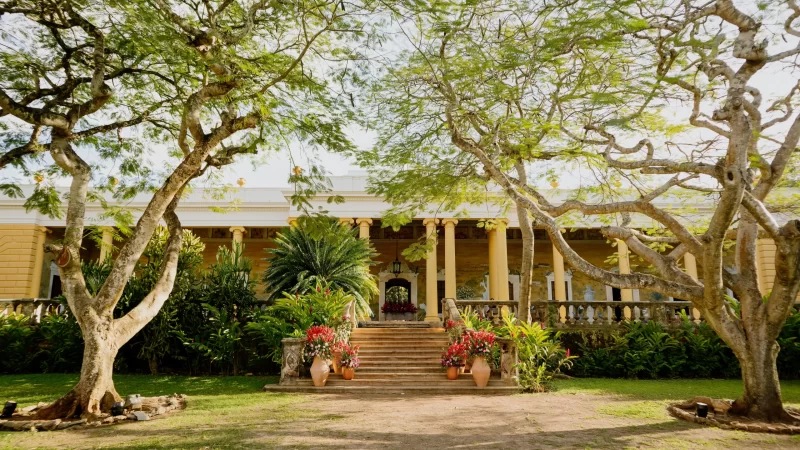
Formal and symmetrical, the most searched of these estates by its own name.
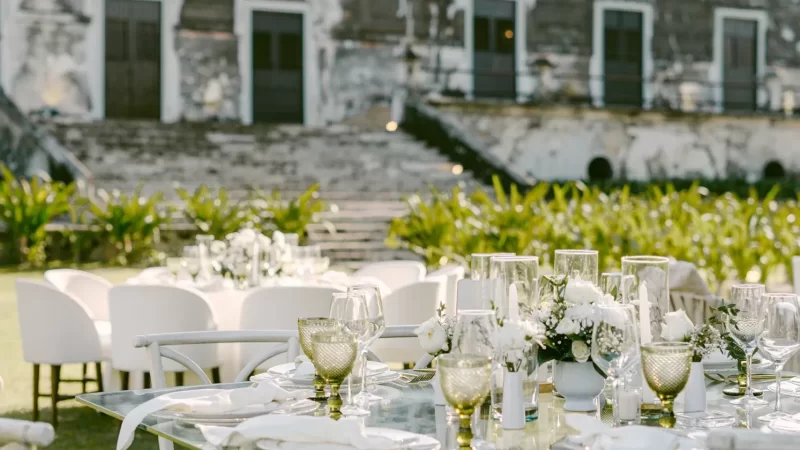
The one estate that operates as a museum by day, preserved rather than renovated.
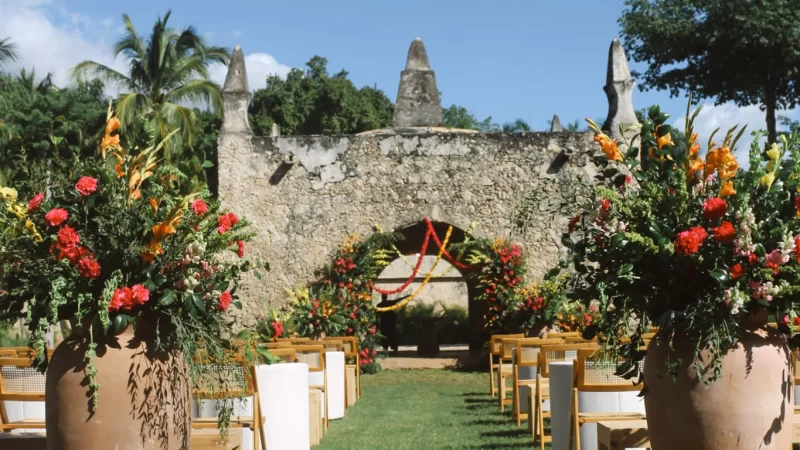
Known for its vaulted machine house and a chapel on the grounds for a religious ceremony.
We also design at San Antonio Hool, Santa Cruz, San Diego Cutz, Temozón Sur and Quinta Montes Molina, among others. See the full archive →
The decision
Six questions to ask a hacienda wedding venue before you fall for the photographs
What to ask | Why it decides the wedding |
|---|---|
Exclusivity | Does the contract close the whole property, or only a defined area of it. Some estates keep rooms in operation, run a restaurant, or receive day visitors. A property that is only partly yours produces a wedding that is only partly private, and you will not see that in any photograph. |
Hours and the hard stop | Ask for the contracted end time and the noise rules, in writing. This single answer is the difference between a celebration that ends when you decide and one that ends when a clause says so. |
Covered space for rain | Yucatán has a rainy season, and a property with a machine house or a covered arcade can absorb a downpour without moving anything. A property without one needs a tent, which is a structural cost, not a contingency. |
Kitchen infrastructure | An estate with a working production kitchen can host a real dinner service for a hundred people. An estate without one requires a field kitchen brought in, which changes the menu that is possible and the crew required to serve it. |
Lodging on the grounds | How many people actually sleep on the property. This determines whether a welcome dinner and a farewell breakfast are natural or whether every day starts with organizing transport for a hundred guests. |
Distance from Mérida | Everything about a destination wedding runs on ground transport. Twenty minutes and seventy minutes are different weddings, for the guests, for the vendors, and for how late the night can safely run. |
Exclusivity
-
Does the contract close the whole property, or only a defined area of it. Some estates keep rooms in operation, run a restaurant, or receive day visitors. A property that is only partly yours produces a wedding that is only partly private, and you will not see that in any photograph.
Hours and the hard stop
-
Ask for the contracted end time and the noise rules, in writing. This single answer is the difference between a celebration that ends when you decide and one that ends when a clause says so.
Covered space for rain
-
Yucatán has a rainy season, and a property with a machine house or a covered arcade can absorb a downpour without moving anything. A property without one needs a tent, which is a structural cost, not a contingency.
Kitchen infrastructure
-
An estate with a working production kitchen can host a real dinner service for a hundred people. An estate without one requires a field kitchen brought in, which changes the menu that is possible and the crew required to serve it.
Lodging on the grounds
-
How many people actually sleep on the property. This determines whether a welcome dinner and a farewell breakfast are natural or whether every day starts with organizing transport for a hundred guests.
Distance from Mérida
-
Everything about a destination wedding runs on ground transport. Twenty minutes and seventy minutes are different weddings, for the guests, for the vendors, and for how late the night can safely run.
There is one question that list deliberately leaves out, because it is the one you cannot ask the estate directly. Most of these properties do not take a booking from just anyone who writes to them.
Who we are, and why it matters here
Access to these places runs through the people who already work in them
Private estates are not booking platforms. Most of them are owned by families, several are lived in, and a few will simply not answer an email that arrives cold from another country. What they respond to is a working relationship, built over years, with someone who has already brought a hundred people onto that property and left it exactly as it was found.
That is what this studio is. Fifteen years planning weddings in Yucatán, more than seventy celebrations in these estates over the last four seasons alone, with guest lists that have run from nineteen people to two hundred and fifty. We are based in Mérida, which is the only reason any of the above is possible.
We take a limited number of weddings each year. Not as a posture. A hacienda weekend consumes a team for months, and the moment the calendar is oversubscribed the thing we are actually selling stops existing.
15+
Years in Yucatán
70+
Weddings in four seasons
19–250
Guests per celebration
18
one of the most prestigious Haciendas in the country
The inventory
What renting a Mexican hacienda covers, and what still has to be brought in
Usually included
Catering and bar
Production and rentals
Design and florals
Guest logistics
Coordination
Six categories, and only one of them appears on the invoice you were expecting. Which raises the question every couple reaches at exactly this point in the search.
The investment
What a wedding at a hacienda venue in Yucatán actually costs
The honest answer is that the property is rarely the largest number on the page. Across the celebrations in this archive, the venue sits behind the banquet in most years, and the guest count moves the total far more than the choice of estate does. Two couples can marry in the same hacienda on consecutive weekends and be forty percent apart, because one invited sixty people and the other invited a hundred and forty.
Rather than give you a range here that would be wrong for half the people reading it, we publish the real figures. Category by category, year over year, from the actual spreadsheets of weddings that happened, including the ones that came in higher than anyone expected.
Numbers settle the practical question and leave the other one completely untouched. There is a reason couples fly a hundred people to a country they have never been to, and it has nothing to do with a spreadsheet.
Who these estates are booked through
Eighteen estates, and the relationships that open them
Everything on this page comes from fifteen years of working in these properties, not from visiting them. YUC’ATÅLOVE designs weddings in the historic haciendas of Yucatán, and nowhere else in Mexico.
Several of these estates do not publish rates, do not answer enquiries from abroad, and release dates only through the people who already work in them. Some we have been booking for over a decade. The list above is not a directory we compiled. It is the set of places we can actually get you into.
Which is also why the number of weddings taken on each year is limited. Eighteen estates, one wedding at a time, and a season that runs a handful of months.
15+
YEARS DESIGNING
250+
Weddings created
4.6
Google rating
100%
Yucatán focused
Which is also why the number of weddings taken on each year is limited. Eighteen estates, one wedding at a time, and a season that runs a handful of months.
What it looks like when it is yours
The gate closes behind the last car
Friday afternoon, the estate is still a place other people work in. By Friday evening it is not. The gate closes behind the last car carrying your family, and for the next three days the walls, the courtyard, the ceiba tree in the middle of it and every room along the arcade belong to one wedding.
No other party on the other side of the garden. No coordinator counting down to the next event. No lights coming on because the venue closes at one. The only schedule is the one you wrote.
That is what taking an estate privately means, and it is the part no photograph on this page can show you.
Every wedding in this guide was once a couple imagining exactly this.
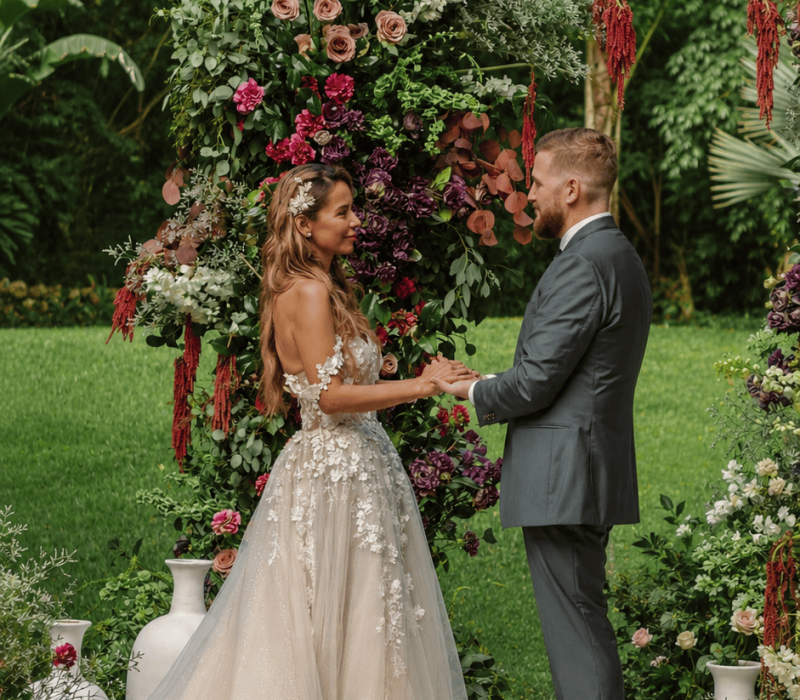
What the estate is really for
A hacienda wedding is four days, not five hours
A conventional wedding is five hours in a room. Your people fly in, sit through a dinner, exchange ninety seconds of conversation with you, and fly home. You spend the most photographed evening of your life meeting your own guests in passing.
An estate you have taken over entirely works differently, because time stops being the constraint. Thursday people arrive and the property fills up slowly. Friday is a welcome dinner where nobody is performing yet and your cousin from Chicago finally meets your college roommate. Saturday is the wedding, and because the estate is yours alone, it ends when you decide it ends rather than when a coordinator turns the lights on. Sunday there is a long breakfast where half the guests are still in yesterday’s clothes and someone finally tells the story everyone has been waiting to hear.
Four days in which the people you love most are in one place with nothing else to do but be there. Most couples never get that again. Some never got it before.
A weekend like that is not something a property hands you when you sign. It is assembled, piece by piece, out of things that arrive from somewhere else, and the contract you sign covers surprisingly few of them.
The first step
One wedding at a time, and dates go early
Estates release dates roughly eighteen months out, and the strongest weekends in the most requested properties are taken first. That is not a sales line, it is how these properties work.
Tell us which estate you are picturing and the window you have in mind. If it is free, we will tell you. If it is not, we will tell you that too, and which comparable estate still is.
A short, personal application, not a contact form. Every request is read personally.
Good questions
Hacienda wedding venues in Mexico, frequently asked
It varies widely by property. The celebrations in this archive have run from nineteen guests to two hundred and fifty, and the constraint is rarely the grounds. It is the covered space available if it rains, the kitchen capacity for a seated dinner, and the number of people who can sleep on the property. Ask about those three before you ask about maximum capacity.
Both arrangements exist, and the difference is significant. Some estates contract full exclusivity, which closes the gates to everyone outside your guest list. Others keep rooms, a restaurant or daytime visits in operation. Ask for exclusivity terms in writing before anything else, because it defines the entire character of the day.
For a full weekend in high season, most couples secure the estate twelve to eighteen months ahead. High season here runs roughly November through March, and the strongest dates in the most requested properties go first. Intimate celebrations and off-season dates work on shorter timelines.
This is the question that should decide your shortlist. Yucatán has a defined rainy season, and the estates that handle it well are the ones with a machine house or a substantial covered arcade, where a dinner can move indoors without changing the design. On a property without covered space, the rain plan is a tent, and a tent is a structural decision made months in advance rather than a call made on the day.
Almost always the second. A hacienda opens the gates and provides the space, the fixed furniture and the basic staff. Catering, bar, production, rentals, design, transport and the coordination of all of it are contracted separately. That gap is exactly the work a destination wedding planner in Mexico exists to close.
Yes. A civil ceremony can be performed at the estate by a civil registry judge, and many properties have a chapel on the grounds for a religious ceremony. The documentation, timing and current Yucatán requirements are covered in the legal requirements guide.
The property is one line of several, and it is usually not the largest. Real figures by category, taken from weddings that actually happened, are published in the cost breakdown rather than estimated here.
Yes. Some estates sit within or just outside Mérida, and there are historic city properties as well, which suit couples who want guests to walk back to their hotel. The trade is atmosphere for convenience: the further out the estate, the more completely the outside world disappears.
The morning after
In a country none of them had been to
Sunday, late, and nobody has left. There is coffee somewhere. Someone’s father is still wearing the guayabera. The two families who had never met on Thursday are arguing about who is driving to the cenote, and the arguing is affectionate.
That is the thing the estate is for. Not the ceremony, which lasts twenty minutes, and not the photographs, which are a by-product. The four days around it, in a place that existed for three hundred years before you and will keep existing after.
It is not the right choice for every couple. For the ones who want that second kind of wedding, it is the only one that makes sense.