
- Home
- Services
- About
- Real Weddings
- Journal
- Wedding Planner
- Wedding Beauty And Wellness
- Wedding Essentials
- Ideas & Tips
- Destination Wedding
- Hacienda Wedding
- Hacienda Sac Chich
- Hacienda Tekik de Regil
- Hacienda Tamchen
- Hacienda San José Cholul
- Hacienda Chichí Suárez
- Chablé Resort
- Hacienda Itzincab Cámara
- Hacienda Temozon Sur
- Hacienda Dzibikak
- Hacienda San Pedro Ochil
- Hacienda Santa Cruz Palomeque
- Hacienda San Diego Cutz
- Hacienda Selva Maya
- Hacienda Sotuta de Peón
- Hacienda Uayamon
- Hacienda Suytunchén
- Hacienda Texan de Palomeque
- Mansion Hotel
- Quinta Montes Molina
- Beach Wedding
- Cenote Wedding
- Religious Wedding
- Legal Wedding
- Symbolic wedding
- Catering
- Favor
- Wedding Fashion
- Media
- Contact
Legal guide · Yucatán, updated after the 2025 reform
Getting married in Mexico, and what the law actually asks of you
Are Destination Weddings Legal in Mexico?
Three ceremonies get planned here and only one of them is legally binding, which is rarely the one with the flowers. This guide covers which, what Yucatán requires now that its 2025 reform removed half the old list, and what changed at the counter in Mérida.
START HERE
Four questions every venue search in Mexico runs into
Planning a wedding in Mexico from another country raises the same questions in almost every couple, and the answers change more by state than most guides admit. This one is written from Yucatán, where the requirements were rewritten in April 2025 and where most guides still describe the version that no longer applies.
This guide answers four questions, in order.
On this page
The first question is the one most couples skip, because it sounds obvious. It is not. The three options below are not three price points of the same thing. They are three different weddings.
The distinction everything else rests on
Civil, religious or symbolic: which ceremony is legal in Mexico
Most couples assume the ceremony they are picturing is also the one that makes the marriage real. Usually it is not, and confusing the two is the most common legal mistake made when planning from abroad.
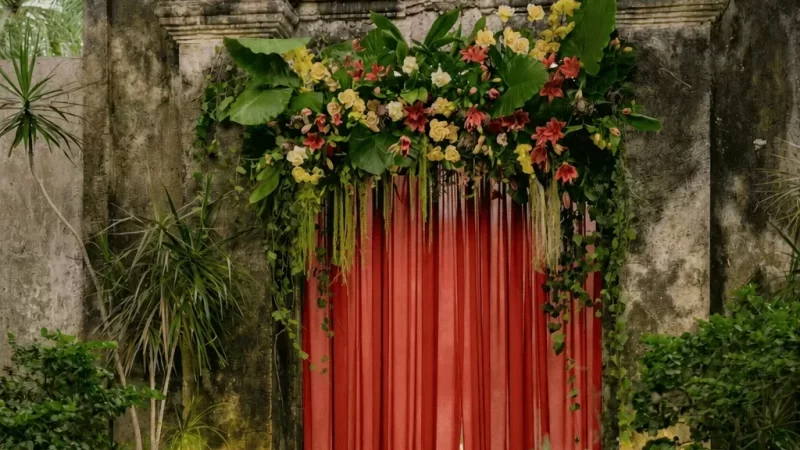
Legally binding
Civil
Performed by an official of the Civil Registry, in Spanish, with its own paperwork and its own appointment. This is the only one of the three with legal effect, and everything downstream rests on it: name changes, inheritance, immigration files, insurance.
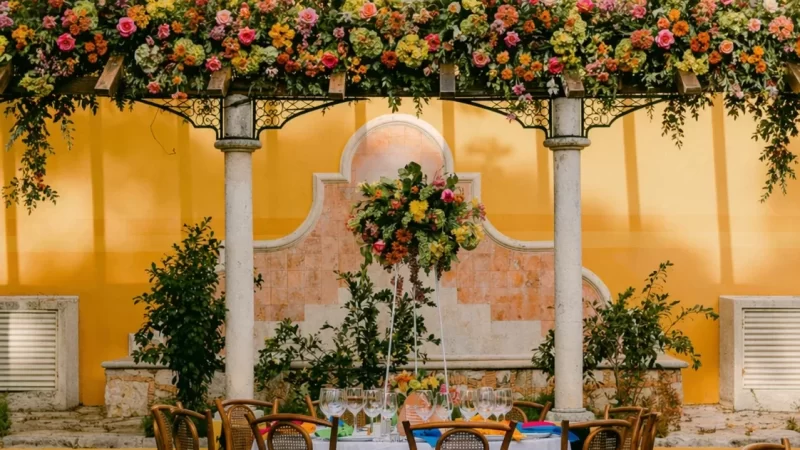
Not legally binding
Religious
Recognized by a faith rather than by the state. Several estates in Yucatán have a chapel on the grounds built when the property was a self-contained village, and most couples pair the religious ceremony with the civil act, here or at home.
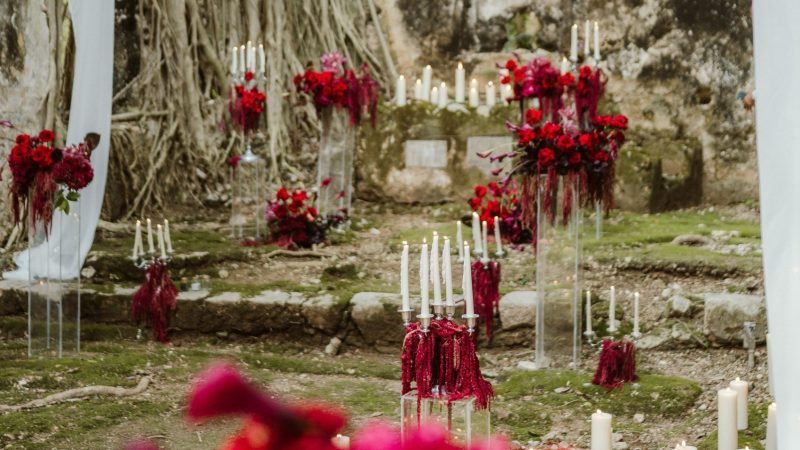
Not legally binding
Symbolic
No civil or religious authority officiates, so the ceremony is built entirely around the couple’s own words. Common among couples who already married legally at home and want the ceremony their guests actually see to happen here.
Many couples marrying in Yucatán choose a religious or symbolic ceremony for the day itself and handle the civil act quietly, either here or before they fly. Both paths are legitimate and neither is a compromise. What matters is knowing which one you are choosing.
Choosing the ceremony is the easy half. The other half is the short stack of paper that stands between you and the only one of the three that counts.
What the civil ceremony asks for
The documents behind a legal wedding in Mexico
Requirements are set state by state in Mexico, which is exactly why a national checklist leaves couples guessing. This is the current Yucatán list, and it is shorter than the one you will find on most sites.
- The marriage registration request, issued by the Civil Registry office when you first ask for information there.
- A certified birth certificate for each of you.
- An apostilled birth certificate with certified translation, for anyone born outside Mexico.
- Valid official identification for both of you, passport included.
- A divorce or death certificate, only if either of you was married before.
- Proof of attendance at the prenuptial orientation workshop.
- Proof of payment of the corresponding state fee.
Almost every guide to marrying in Mexico still lists the old requirements, because almost none of them were written here. Here is what actually changed, and when.
Acuerdo 06/2025 · in force since April 28, 2025
What Yucatán changed about getting married, and what it left behind
The state government published the reform in the Diario Oficial, rewriting several Civil Registry procedures with marriage among them. It is recent enough that most published guidance, including much of what ranks for these searches, describes a process that no longer exists.
Deleted
- The prenuptial medical exam, including HIV and VDRL blood tests
- Three witnesses presented at the Civil Registry office
- Birth certificates from either set of parents
In force now
- A prenuptial orientation workshop, newly mandatory for both of you
- The document list above, with the apostille where either of you was born abroad
- A registration appointment capped by law at thirty minutes
The workshop and the appointment are two different things
Couples researching this from abroad tend to collapse them into one, which makes the process sound longer than it is. They happen separately, and only one of them is a queue.
1.- Request information
The Civil Registry issues the registration request form. This is also where you confirm the current fee for the office you will use, since it varies by municipality.
2.- Attend the workshop
The prenuptial orientation workshop, mandatory since the reform. It runs roughly one to two hours and covers the effects of marriage, property regimes and equal rights between spouses.
3.- File the documents
Birth certificates, identification, the apostille where it applies, the workshop certificate and proof of payment, submitted together.
4.- Register the marriage
The act itself. The same 2025 reform caps this procedure at thirty minutes, and public officials who ask for any of the deleted requirements are subject to sanction.
One detail worth checking before you set a date. Most municipalities in Yucatán expect a birth certificate issued within the last year. If yours is older, request a fresh certified copy first, because the rest of the sequence is built on top of that document. Mérida’s office is fully digitized and the state system connects all 106 municipalities, so a record created in one is recognized in all of them.
The ceremony, on location
Where the civil ceremony can take place
The most requested estate here, open and architectural, built around a long central axis.
Recently reopened, with architecture that has not yet worn in from a decade of weddings.
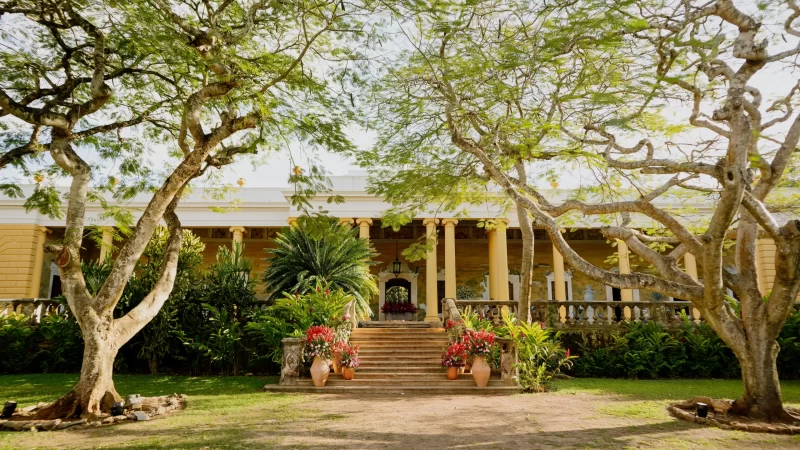
Formal and symmetrical, the most searched of these estates by its own name.
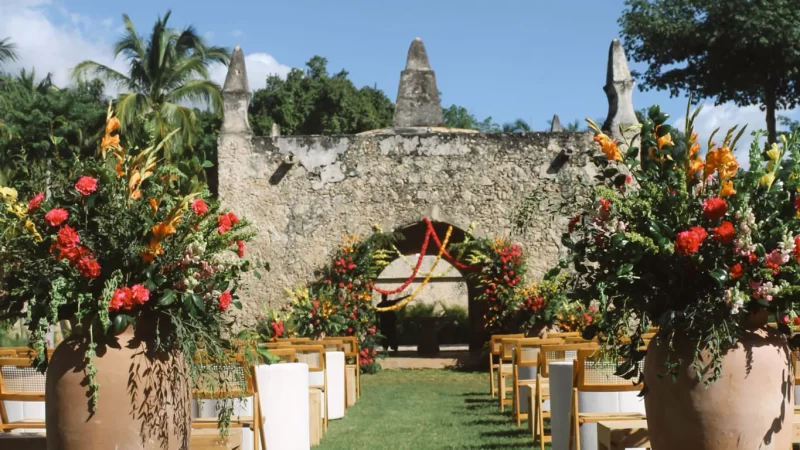
Known for its vaulted machine house and a chapel on the grounds for a religious ceremony.
Where these ceremonies happen See all the estates, Catholic ceremony requirements, Requirements in Mérida →
Planning around the calendar
The best time of year to marry in Yucatán
Nothing here changes what the law requires. It changes how comfortable the days around the ceremony are, and how much room you have to sequence the paperwork without racing a full calendar.
The most temperate months and the most requested window. Estates release dates roughly eighteen months out and the strongest weekends go first, so if this is your window the legal sequence is worth starting well before you would think to.
Warmer, greener, and considerably more available. Yucatán has a defined rainy season, which matters less than couples expect at an estate with a covered machine house, and matters a great deal at one without.
A direct answer
Marriage equality in Yucatán
Same-sex marriage has been legal in Yucatán since March 4, 2022, when the state’s secondary laws took effect and the Civil Registry stopped requiring couples to obtain a court injunction first. Marriage equality is law across every state in Mexico.
In practice this means the process described on this page applies identically: the same documents, the same workshop, the same office, the same thirty-minute appointment. Where a chapel ceremony is part of the plan, availability is a question for the individual estate and its congregation, not a legal one.
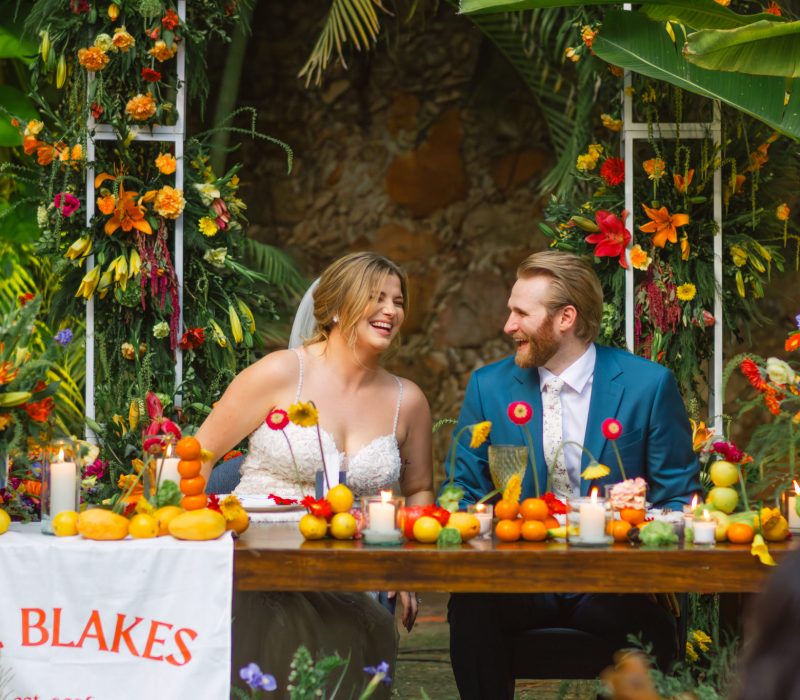
Married here, and married correctly.Which leaves one last step that happens after everyone has flown home.
After the wedding
Making a Mexican marriage count in your home country
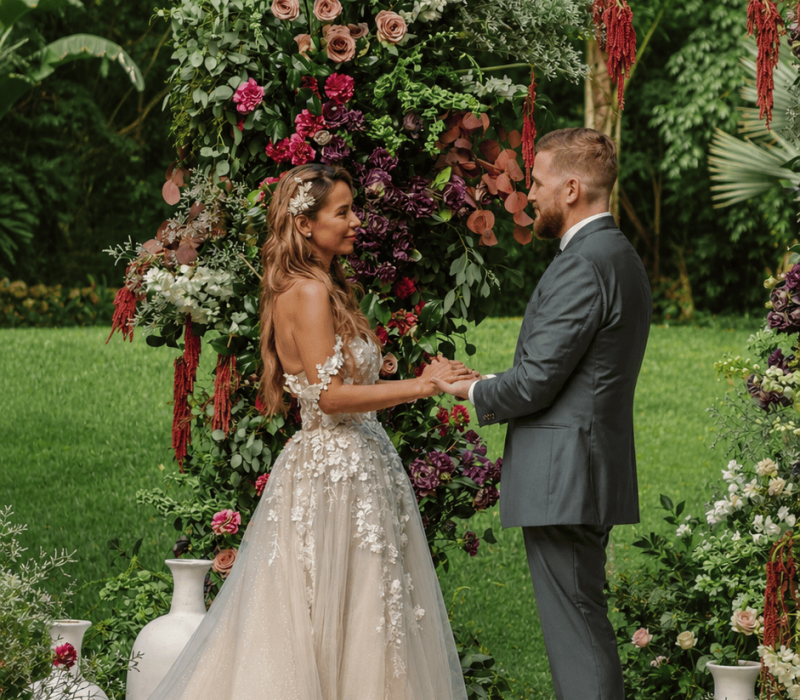
The certificate you receive is valid, but it is in Spanish and issued by a Mexican authority, which means most couples have one short errand left when they land.
- Certified translation. The marriage certificate is translated by a certified translator into the language of the receiving country.
- Apostille. The document is apostilled so that it is recognized internationally, the mirror image of what was asked of your birth certificate at the start.
- Registration at home. for anyone born outside Mexico.The translated, apostilled certificate is presented to the relevant local authority, which in the United States is usually a county clerk or vital records office.
This is the point where most guides stop, because most guides were written by people who have never stood at that counter. This one was not.
Who wrote this
Written from the office that files these papers every season
Almost every guide to getting married in Mexico stops at the national level: apostilles, translations, a general note that the civil ceremony is the one that counts. Most still list blood tests and witnesses, because they were written before April 2025 and nobody has been back to check.
YUC’ATÅLOVE has coordinated the legal side of destination weddings in Yucatán for fifteen years, through the requirements that existed before the reform and the ones that replaced them. The details on this page, the thirty-minute cap, the one-year window on a birth certificate, the sanction for officials who ask for the deleted items, only show up when someone has been at that counter recently.
It is not the only reason to have someone local handling this part. It is the one couples never think to ask about until the date is already booked.
What the paperwork is for
Thirty minutes, and then none of this matters again
The judge closes the folder. Somebody’s mother is crying and pretending not to. The certificate goes into a drawer and stays there for the rest of your life, and the four days around it are the part anyone will actually remember.
Everything on this page exists so that the shortest, least photographed half hour of the weekend is also the one nobody has to think about.
Good questions
Getting married in Mexico, frequently asked
Yes, provided the civil procedure is followed. A civil ceremony performed by an official of the Civil Registry is legally binding and recognized abroad once translated and apostilled. A religious or symbolic ceremony on its own is not, however meaningful it is.
Only the civil one. The religious or symbolic ceremony can absolutely be the one your guests attend and the one you remember, but it does not change your legal status by itself. See the comparison above.
No. The prenuptial medical exam, including HIV and VDRL tests, was eliminated by the 2025 reform. Guides that still list it are describing the process as it was before April 28, 2025.
None. The requirement to present witnesses at the Civil Registry was removed in the same reform. Officials who ask for it are asking for a requirement that no longer exists.
It is a session run by the Civil Registry, mandatory for both of you since the 2025 reform, covering the requirements and effects of marriage, property regimes, equal rights between spouses and the resources available in cases of family violence. It runs roughly one to two hours, and it is separate from the registration appointment itself.
The registration procedure is capped by law at thirty minutes under the 2025 reform. The workshop is the longer commitment, and it happens beforehand rather than on your wedding day.
Yes. The additional step is an apostilled birth certificate with certified translation for anyone born outside Mexico. Everything else on the list applies the same way it does to a Mexican couple.
Yes, since March 4, 2022, and it is legal nationwide in Mexico. The process on this page applies identically. More above.
Yes. A Civil Registry judge can perform the ceremony at the property. Municipalities usually charge a different fee for a ceremony held outside their offices, so confirm it along with the base fee. See the estates.
It can be. Most municipalities in Yucatán expect a certificate issued within the last year. Request a fresh certified copy before starting anything else, since the rest of the timeline depends on it.
Yes, and many couples do. Complete the civil marriage in your own country, then hold a religious or symbolic ceremony at the estate. Nothing about the day looks different.
The state fee is modest and is closer to a formality than a budget line, but it is not identical across Yucatán and it changes when the ceremony is held outside the Civil Registry office, so confirm the current figure with the office you will be using. The wedding itself is a separate conversation, with real figures in the cost breakdown.
The first step
One wedding at a time, and the legal sequence starts earlier than couples expect
Estates release dates roughly eighteen months out, and the paperwork is sequenced around a birth certificate that has to be current. Neither of those is urgent on its own. Together they decide how much room you have.
Tell us the window you have in mind and where you are marrying from. If the dates are open, we will say so. If the legal timeline is tighter than it looks, we will say that too.
A short, personal application, not a contact form. Every request is read personally.